Showing posts with label Software. Show all posts


GTA Mod Installer v5.0 betaFile InfoStatsAuthor:cpmusickViews:3,439,465Added:17th Nov 2004Downloads:1,826,421Last Update:17th Nov 2004Last Downloaded:18:24 on 15th Apr 2014Version:5.0 betaRating:3.6/5 (7600 Votes)3.6/5 (7600 Votes)3.6/5 (7600 Votes)3.6/5 (7600 Votes)3.6/5 (7600 Votes) (7600 Votes)Website:murtazaravjani.blogspot.comSize:1.36 Mb
jaymensean@gmail.com

Description

From murtazaravjani.blogspot.com:
This program allows you to easily install custom vehicles and mods. It has the ability to automatically search for the vehicle's DFF and TXD file and insert it into the correct IMG files. It can also automatically search readme or text files that come with the custom car and find the handling.cfg, default.ide, and carcols.dat info for that car and automatically insert it into the game. This program works with both GTA3 and Vice City. It also works with just about ANY custom vehicle downloaded from any website and you can even select the ZIP or RAR file you downloaded to install the car.

It can also convert GTA3 cars to Vice City, and Vice City cars to GTA3, and it can also automatically detect whether or not the DMagic1 Wheel Mod is installed. If it's not, then GMI can automatically install the mod; no download required. You also have the ability to choose which car to replace! You should definitely download this if you want to easily install custom vehicles and mods! It also includes script support and it works with mods. Similar to the Mod Installer Generator, people can make scripts for mods and then the people who download the mod can have it automatically be installed, according to the commands in the script file. It also sets the necessary files to NOT be read-only. Also, it has the ability to backup any modified files, whether it's a mod or a vehicle.


THE PASSWORD IS murtazaravjani.blogspot.com


Click Here To Download


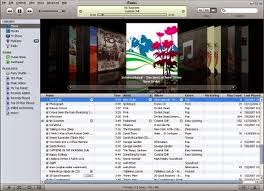
iTunes is a media player, media library, and mobile device management application developed by Apple Inc. It is used to play, download, and organize digital audio and video on personal computers running the OS X andMicrosoft Windows operating systems. The iTunes Store is also available on the iPod TouchiPhoneiPad and PC .
Through the iTunes Store, users can purchase and download music, music videos, television shows,audiobookspodcasts, movies, and movie rentals in some countries, and ringtones, available on the iPhone and iPod Touch (fourth generation onward). Application software for the iPhone, iPad and iPod Touch can be downloaded from the App Store.
iTunes 11 is the most recent version of iTunes, available for OS X v10.6.8 or later, as well as Windows XP or later. It was released on November 29, 2012, one month later than expected, because of a delay by Apple, which explained that it needed extra time to complete the revisions necessary to complete the update.[4]

Music[edit]

iTunes keeps track of songs by creating a virtual library, allowing users to access and edit a song's attributes. These attributes, known as metadata, are stored in two separate library files. The first is a binary file called iTunes Library and it uses a proprietary file format ("ITL"). It caches information like artist and genre from the audio format's tag capabilities (the ID3 tag, for example) and stores iTunes-specific information like play count and rating. iTunes typically reads library data only from this file.[29] The second file, iTunes Music Library.xml, is refreshed whenever information in iTunes is changed. It uses an XML format, allowing developers to easily write applications that can access the library information (including play count, last played date, and rating, which are not standard fields in the ID3v2.3 format). Apple's own iDVDiMovie, and iPhoto applications all access the library.[30] If the first file exists but is corrupted, such as by making it zero-length, iTunes will attempt to reconstruct it from the XML file. Detailed third-party instructions regarding this are documented elsewhere.[31] Beginning with iTunes 10.5.3 this behavior has been changed such that the XML file is not read automatically to recreate the database when the database is corrupted. Rather, the user should load the iTunes Library.xml file via File > Library > Import Playlist....
It has also been noted that iTunes does not automatically track changes to actual files in the library. If a file is moved or deleted, iTunes will display an exclamation mark beside the library entry and the user will need to manually amend the library record. Several third party tools address this problem.[32]
iTunes supports ripping from CDs, but not from DVDs. However, in 2008, Apple and select film studios introduced "iTunes Digital Copy", a bonus feature on some DVDs that provides a copy-protected and iTunes-compatible file for select films.[33]

File format support[edit]

iTunes 11 can currently read, write and convert between MP3AIFFWAVMPEG-4AAC and Apple Lossless (.m4a).[34]
iTunes can also play any audio files that QuickTime can play (as well as some video formats), including Protected AAC files from the iTunes Store and Audible.comaudio books. There is limited support for Vorbis and FLAC enclosed in an Ogg container (files using the Ogg container format are not natively supported) or Speexcodecs with the Xiph QuickTime Components, but requires iTunes to run in 32-bit mode (no longer an option after iTunes 11.1.2 released with OS X Mavericks). Because tag editing and album art is done within iTunes and not QuickTime, these features will not work with these QuickTime components. As of Snow Leopard, iTunes 9 (Mac) will play HE-AAC / AAC+ internet streams. The latest version of iTunes (Win/Mac) supports importing audio CDs with the default iTunes standard file format of AAC at 256 kbit/s, but users can choose from 16 kbit/s to 320 kbit/s constant bit rates (CBR) in either AAC or MP3.[citation needed] Importing of audio CDs into MP3 or AAC formats can also be accomplished using variable bitrate (VBR) encoding.
The Windows version of iTunes can automatically transcode DRM-free WMA (including version 9) files to other audio formats, but does not support playback of WMA files and will not transcode DRM protected WMA files. Telestream, Inc. provides free codecs for Mac users of QuickTime to enable playback of unprotected Windows Media files. These codecs are recommended by Microsoft.[35]
In addition to importing CDs into the iTunes library, users can also import digital audio files from other sources, an any format that iTunes supports. This can be accomplished by either right clicking on the file, selecting open with, and then selecting iTunes or dragging the file into the open iTunes window. Alternatively, for Amazon.com mp3s, the Amazon MP3 Downloader application will automatically import the mp3 files into the iTunes library.[36]

Windows[edit]

Hardware:
  • A PC with a 1 GHz Intel or AMD processor
  • Intel Pentium D or faster processor is required to play Standard Definition video from the iTunes Store
  • 2.0 GHz Intel Core 2 Duo or faster processor is required to play HD video, an iTunes LP, or iTunes Extras from the iTunes Store
  • 512 MB of RAM; 1 GB is required to play HD video, an iTunes LP, or iTunes Extras
  • Screen resolution of 1024×768 or greater; 1280×800 or greater is required to play an iTunes LP or iTunes Extras
  • DirectX 9.0-compatible video card with 32 MB of video RAM; 64 MB recommended
  • Broadband Internet connection to use the iTunes Store
  • iTunes-compatible CD or DVD recorder to create audio CDs, MP3 CDs, or back-up CDs or DVDs
Software:

THE PASSWORD IS hatimk20.blogspot.com


Click Here To Download



 INTRODUCTION OF JAVA

Java is an object-oriented programming language with a built-in application programming interface (API) that can handle graphics and user interfaces and that can be used to create applications or applets. Because of its rich set of API's, similar to Macintosh and Windows, and its platform independence, Java can also be thought of as a platform in itself. Java also has standard libraries for doing mathematics.
Much of the syntax of Java is the same as C and C++. One major difference is that Java does not have pointers. However, the biggest difference is that you must write object oriented code in Java. Procedural pieces of code can only be embedded in objects. In the following we assume that the reader has some familiarity with a programming language. In particular, some familiarity with the syntax of C/C++ is useful.
In Java we distinguish between applications, which are programs that perform the same functions as those written in other programming languages, and applets, which are programs that can be embedded in a Web page and accessed over the Internet. Our initial focus will be on writing applications. When a program is compiled, a byte code is produced that can be read and executed by any platform that can run Java.
To use this tutorial you should run and study each program as you read along, so that you can see how added features affect the programs.

What will I get when I download Java software?
The Java Runtime Environment (JRE) is what you get when you download Java software. The JRE consists of the Java Virtual Machine (JVM), Java platform core classes, and supporting Java platform libraries. The JRE is the runtime portion of Java software, which is all you need to run it in your Web browser. When you download Java software, you only get what you need - no spyware, and no viruses. 

What is Java Plug-in software?
The Java Plug-in software is a component of the Java Runtime Environment (JRE). The JRE allows applets written in the Java programming language to run inside various browsers. The Java Plug-in software is not a standalone program and cannot be installed separately. 
I have heard the terms Java Virtual Machine and JVM. Is this Java software?
The Java Virtual Machine is only one aspect of Java software that is involved in web interaction. The Java Virtual Machine is built right into your Java software download, and helps run Java applications. 


Click Here To Download


THE PASSWORD IS MTS


Features

Core playback and library functions

Windows Media Player supports playback of audio, video and pictures, along with fast forward, reverse, file markers (if present) and variable playback speed (seek & time compression/dilation introduced in WMP 9 Series). It supports local playback, streaming playback with multicast streams and progressive downloads. Items in a playlist can be skipped over temporarily at playback time without removing them from the playlist. Full keyboard-based operation is possible in the player.
Windows Media Player supports full media management, via the integrated media library introduced first in version 7, which offers cataloguing and searching of media and viewing media metadata. Media can be arranged according to album, artist, genre, date et al.. Windows Media Player 9 Series introduced Quick Access Panel to browse and navigate the entire library through a menu. The Quick Access Panel was also added to the mini mode in version 10 but was entirely removed in version 11. WMP 9 Series also introduced ratings and Auto Ratings. Windows Media Player 10 introduced support for aggregating pictures, Recorded TV shows, and other media into the library. A fully featured tag editor was featured in versions 9-11 of WMP, called the Advanced Tag Editor. However, the feature was removed in Windows Media Player 12. Since WMP 9 Series, the player features dynamically updated Auto Playlists based on criteria. Auto Playlists are updated every time users open them. WMP 9 Series and later also supports Auto Ratings which automatically assigns ratings based on the number of times a song is played. Pre-populated auto playlists are included in Windows Media Player 9 Series. Custom Auto Playlists can only be created on Windows XP and later.
In Windows Media Player 11, the Quick Access Panel was removed and replaced with an Explorer-style navigation pane on the left which can be customized for each library to show the user selected media or metadata categories, with contents appearing on the right, in a graphical manner with thumbnails featuring album art or other art depicting the item. Missing album art can be added directly to the placeholders in the Library itself (though the program re-renders all album art imported this way into 1x1 pixel ratio, 200x200 resolution jpegs). There are separate Tiles, Icons, Details or Extended Tiles views for Music, Pictures, Video and Recorded TV which can be set individually from the navigation bar. Entries for Pictures and Video show their thumbnails. Version 11 also introduced the ability to search and display results on-the-fly as characters are being entered, without waiting for Enter key to be hit. Incremental search results are refined based on further characters that are typed. Stacking allows graphical representations of how many albums there are in a specific category or folder. The pile appears larger as the category contains more albums. The List pane includes an option to prompt the user to remove items skipped in a playlist upon save or skip them only during playback.

Visualizations


Windows Media Player 11 running in mini mode (in Windows XP MCE) showing afrequency domain divisionvisualization
While playing music, Windows Media Player can show visualizations. The current three visualizations are Alchemy, which was first introduced in version 9, Bars and Waves, which has been used since version 7, and Battery, introduced in version 8. "Musical Colors" was removed starting with version 9, but is retained if Windows Media Player was upgraded from version 7 or 8. Version 11 and above refrains from having the former "Ambience", "Particle", "Plenoptic", and "Spikes" visualizations. The reason for their removal was that the visualizations do not support full screen controls (either the visualization gets shifted to the left while there is a thick black bar to the right side of the screen or that there are no full screen controls). More visualizations such as "Trilogy II" and "Yule Log" can be downloaded from Microsoft's website.

Format support

The player includes intrinsic support for Windows Media codecs and also WAV and MP3 media formats. On Windows XP and above with WMP 9 Series and later, the Windows Media Audio Professional codec is included which supports multichannel audio at up to 24-bit 192 kHz resolution. Windows Media Player 11 includes the Windows Media Format 11 runtime which adds low bitrate support (below 128 kbit/s for WMA Pro), support for ripping music to WMA Pro 10 and updates the original WMA to version 9.2.
Support for any media codec and container format can be added using specific DirectShow filters or Media Foundationcodecs (Media Foundation codecs only in Windows Vista and later). The player will not play MP3 files that contain compressed ID3 headers ("tags"); trying to do so results in a "The input media file is invalid" error message. MP3 playback support was built-in beginning with version 6.1 and audio CD playback was natively supported with version 7.
DVD playback features minus the necessary decoders were integrated into Windows Media Player 8 for Windows XP. The player activates DVD and Blu-ray playback functionality with support for menus, titles and chapters, parental controls and audio track language selection if compatible decoders are installed. MPEG-2 and Dolby Digital (AC-3) decoders were included beginning with Windows Media Player 11 on Windows Vista (Home Premium and Ultimate editions only).
Windows Media Player 12 adds native support for H.264 and MPEG-4 Part 2 video formats, AAC audio[12] and 3GPMP4and MOV container formats.[13] Windows Media Player 12 is also able to play AVCHD formats (.Murtaza and .murtaza).